Laboratory research education only. This article does not provide human or veterinary dosing, administration, diagnosis, treatment, or safety guidance.
- IdentityConnect the report to the material.
- MethodKnow what question the test answers.
- ResultRead the value with its unit and scope.
- TraceabilityCheck dates and report authorization.
Separation before measurement
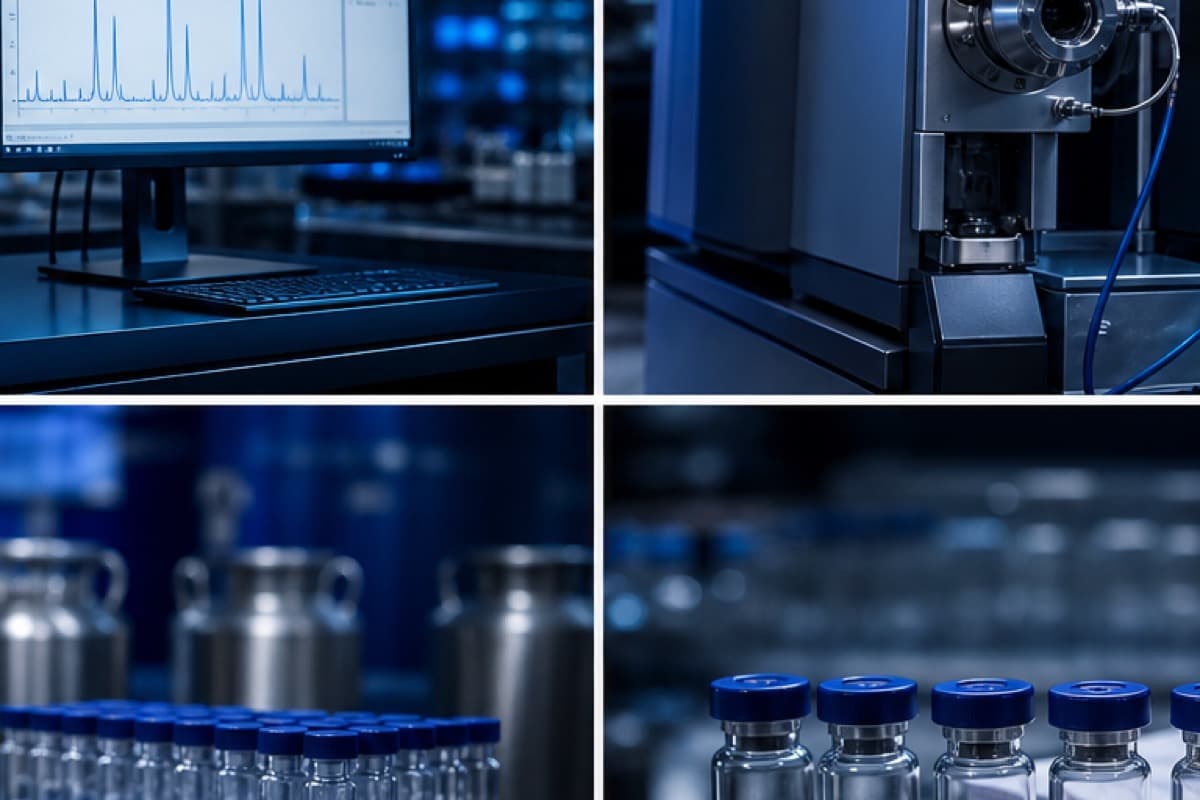
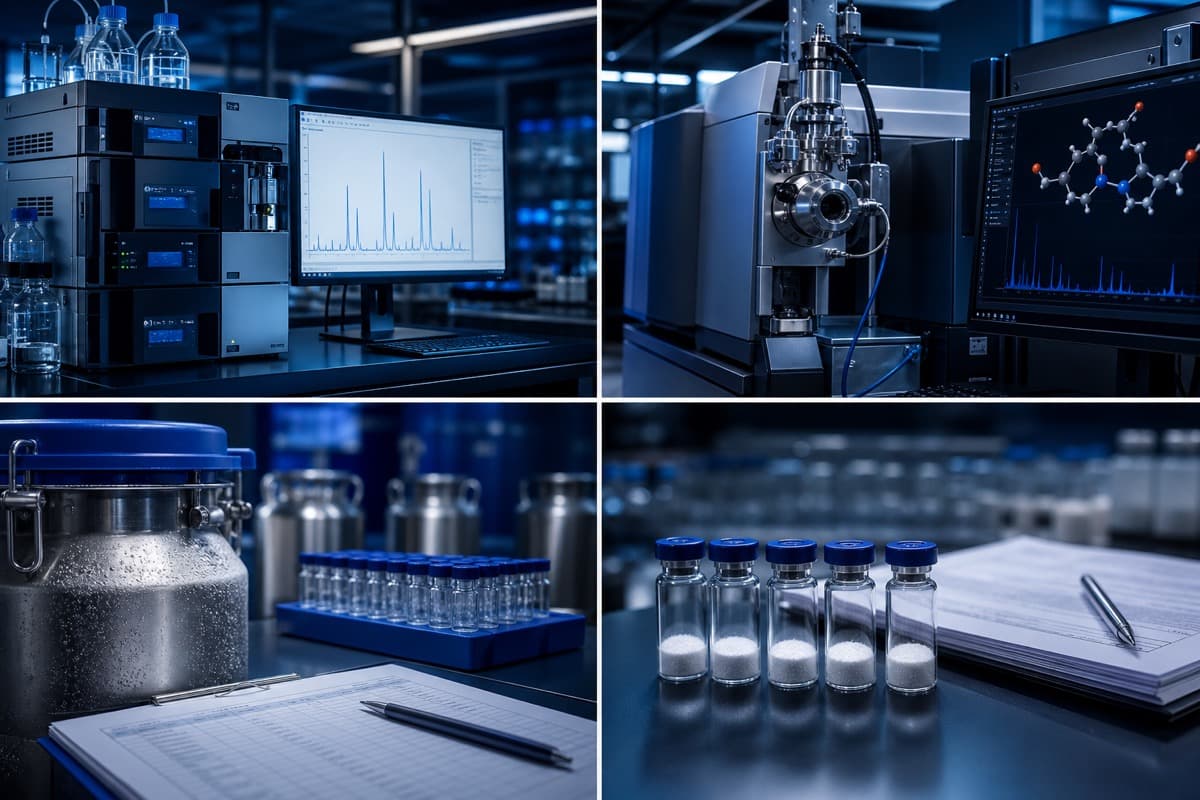
High-performance liquid chromatography separates sample components as they pass through a column. The resulting chromatogram shows signals at different retention times and supports evaluation of the relative composition of a sample.
Area percentage is method-dependent
A reported chromatographic area percentage depends on the procedure, detector, integration settings, sample preparation, and system performance. It should be read as a result produced under stated conditions, not as a universal description of every property of the material.
Purity is not identity
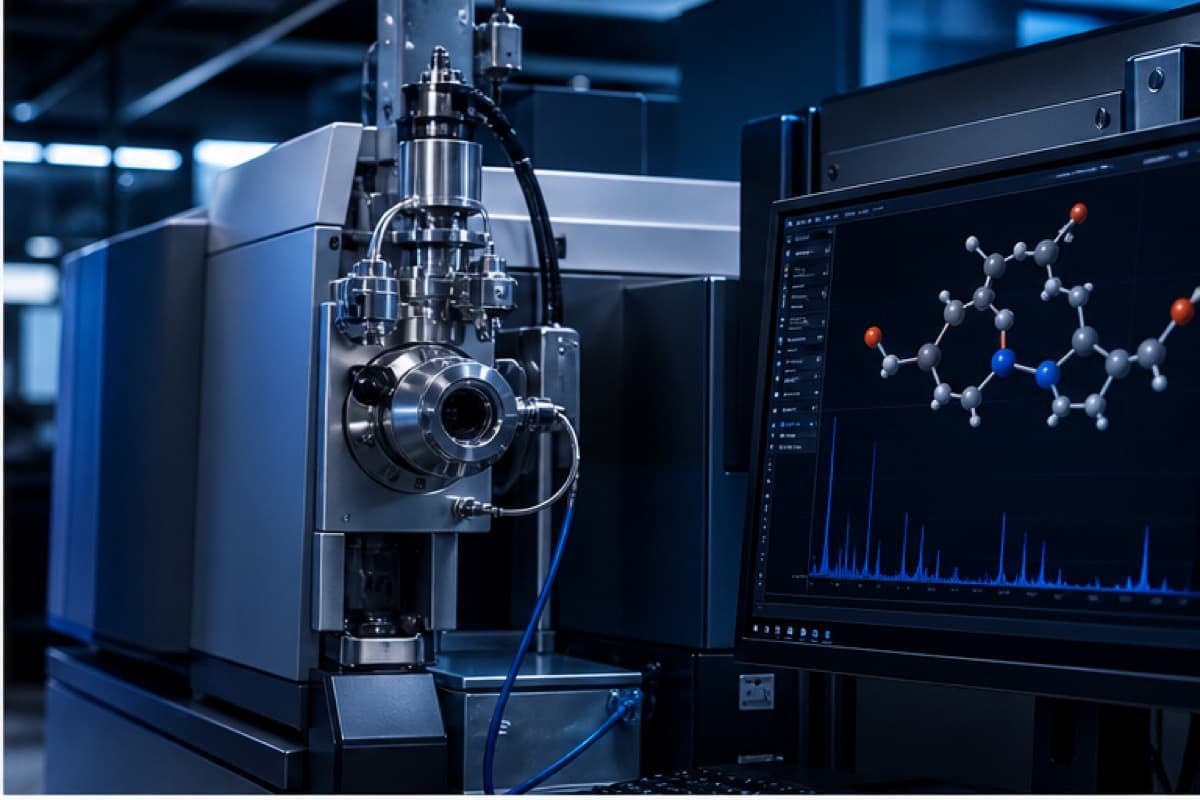
A clean chromatogram does not by itself establish molecular identity. Laboratories often pair separation techniques with identity-focused methods such as mass spectrometry, using a fit-for-purpose analytical strategy.
References and further reading
Open the original sources and evaluate their methods, limitations, and applicability independently.
Related education
 COAs & TestingCOAs & Testing · 4 min readA Practical Workflow for Verifying COA AuthenticityMatch the task number, the sample name, and the file. A logo and a large percent do not prove the report belongs to that vial.Read article →
 COAs & TestingCOAs & Testing · 4 min readHPLC vs. Mass Spectrometry: Different Questions, Complementary EvidenceHPLC sorts a mixture by time on a column. Mass spectrometry sorts ions by mass. One result does not do the other test's job.Read article →
 COAs & TestingCOAs & Testing · 5 min readContent Mass vs. Purity: Why the Numbers Are Not InterchangeablePurity is how clean the signal looked under the stated method. Content is how much of the named material the lab measured. The unit travels with the number.Read article →
Research-use notice
This material is educational and does not provide medical, dosing, administration, treatment, or human-use guidance. For laboratory research use only.