Laboratory research education only. This article does not provide human or veterinary dosing, administration, diagnosis, treatment, or safety guidance.
HPLC is a clock
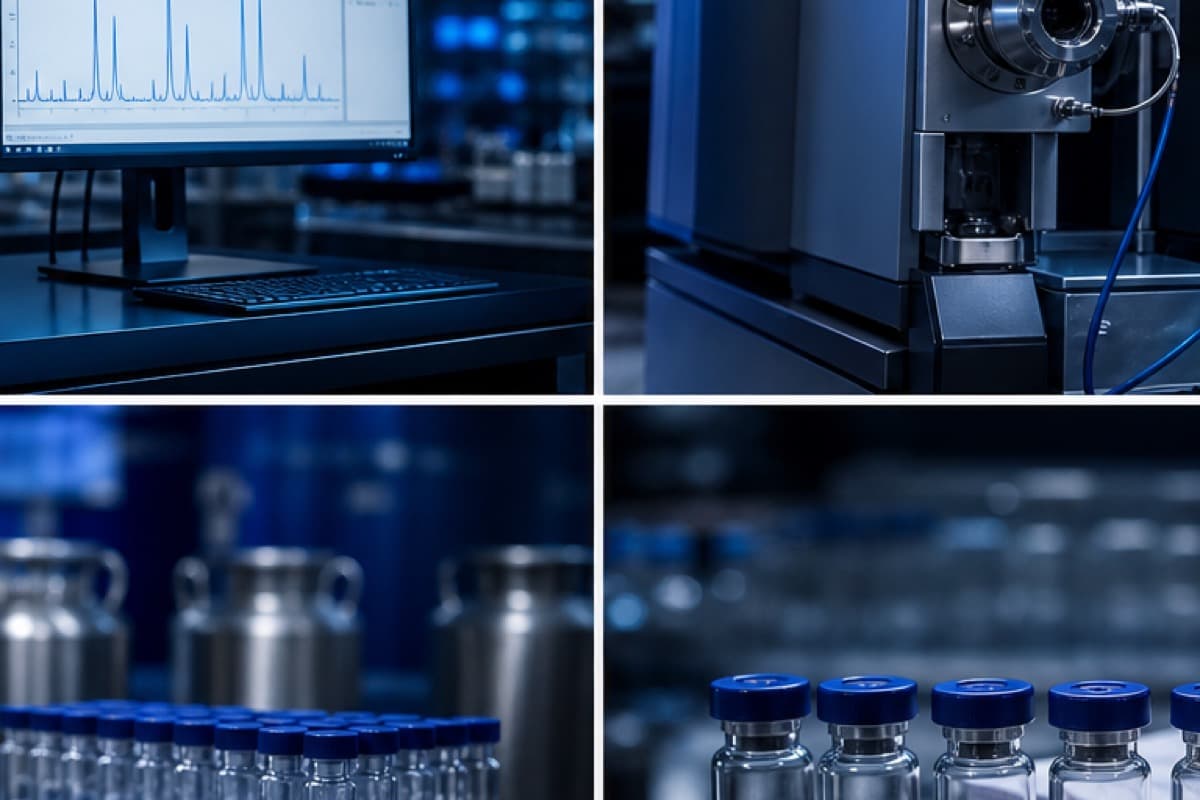
HPLC pushes a prepared sample through a column. Pieces of the mixture come off at different times, and a detector draws a peak for the signal it sees. The tall peak is the signal that method produced at that retention time. It is not automatically the compound named on the label.
Area percent is the share of the integrated signal. It is not a weighing of the powder in the vial.
Mass spectrometry is a scale
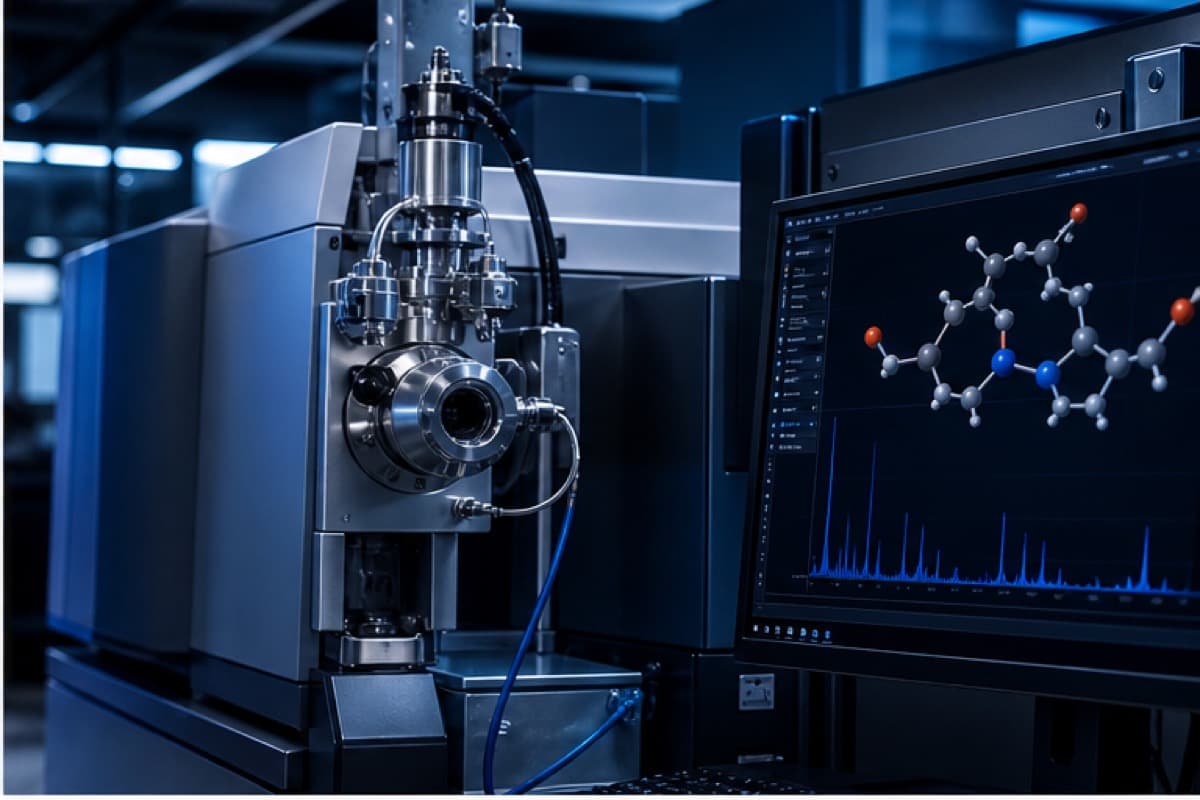
Mass spectrometry charges the sample and sorts ions by mass-to-charge. A peptide often shows up in more than one charge state. The analyst uses that pattern to support a molecular mass.
A mass that fits the named compound supports identity. It does not say how much else was sitting in the mixture.
A clean peak can still be the wrong molecule
A single large peak does not name the compound if nothing checked the mass. A matching mass does not mean the sample was clean if nothing separated the impurities. A report that only gives you one of those results has answered one question.
Ipamorelin task 150447 prints purity 99.942%. Read that as a purity result. Do not add “confirmed by mass spectrometry” unless that report says so.
Write the method the page actually names
If the certificate does not say HPLC, the notebook should not say HPLC. If it does not say mass spectrometry, leave that out. The SS-31 report, task 172219, is titled “Elamipretide (SS-31) analysis.” That title is the name the lab used. It is not a description of the detector.
Research reading for adults 21 and older. Not a method to run on people or animals.
References and further reading
Open the original sources and evaluate their methods, limitations, and applicability independently.
Related education
 COAs & TestingCOAs & Testing · 4 min readA Practical Workflow for Verifying COA AuthenticityMatch the task number, the sample name, and the file. A logo and a large percent do not prove the report belongs to that vial.Read article →
 COAs & TestingCOAs & Testing · 5 min readContent Mass vs. Purity: Why the Numbers Are Not InterchangeablePurity is how clean the signal looked under the stated method. Content is how much of the named material the lab measured. The unit travels with the number.Read article →
 COAs & TestingCOAs & Testing · 7 min readWhat HPLC Testing Measures in Peptide AnalysisLearn how chromatographic separation supports purity assessment and why identity requires additional evidence.Read article →
Research-use notice
This material is educational and does not provide medical, dosing, administration, treatment, or human-use guidance. For laboratory research use only.