Laboratory research education only. This article does not provide human or veterinary dosing, administration, diagnosis, treatment, or safety guidance.
Short does not mean obvious
A tripeptide feels like something you could identify by squinting. You cannot. Lysine-proline-valine is still a molecule that shows up in a mass spectrum as ions, often in more than one charge state, under the conditions that lab used. The pretty mental picture of three beads on a string is not data.
KPV 10 mg is the labeled amount on this vial. A mass result, when a report has one, supports identity. It does not weigh the 10 mg for you, and it does not grade purity unless the method was a purity method.
Calculated mass versus printed mass
You can look up residue masses and add them. That sum is a homework number. It becomes useful only when you put it next to an observed value from a named method, with the adducts and the charge the analyst actually used. A naked sum in a margin, labeled “theoretical,” gets copied later as if the instrument said it.
If the COA on the KPV page prints an observed mass, use that. If it prints something else, a percent, a content figure, a chromatogram, describe that. Do not add a mass the PDF does not contain so the note looks complete.
Purity is still a different sentence
Area percent answers how the detector signal was divided under that chromatography. A matching mass answers whether the ion fits the named chain. KLOW’s task 87708 does not even give you a purity percent, and it is the wrong file besides. Do not invent a purity for the single because the blend was silent.
ICH’s method guidance is dull on purpose. The number and the procedure travel together. A KPV note that says “99” with no method is a rumor.
Do not scale the blend mass down
Task 87708’s KPV line is 11.75 mg in that blend sample. Dividing, subtracting, or “adjusting” 11.75 to represent a 10 mg single is fiction. The single is labeled 10 mg. The blend line is 11.75 mg for that component in that sample. Stop there.
The other blend lines, 71.36, 12.41, and 11.12, are not KPV either. They do not get folded into a KPV total.
A finished identity note
Sample name, method, observed value, unit, date, task number if the file has one. If any of those are missing, the note says missing. Adults 21 and older. Laboratory research only. Not for human or veterinary use.
Keep a rejected-numbers list
Write down the figures you will not use for KPV 10 mg: 11.75 mg from task 87708, any sum of the KLOW lines, any purity you remember from a different peptide, any mass you added from a residue table without labeling it calculated. Tape that list inside the folder. It feels negative. Negative lists prevent confident nonsense.
When a real report for this SKU prints a mass or a percent, add that figure on a new line with the task number and strike nothing from the rejected list. The rejected figures stay rejected. They belonged to other samples.
Adults 21 and older. Laboratory research only. Not for human or veterinary use.
When you finally have an observed mass for this SKU, write the charge state next to it if the report gives one. A bare number will be compared later with someone’s calculated average mass and declared “wrong” by a person who ignored the adduct. If the report does not state the charge, write that it did not. Do not guess a charge to make the numbers kiss.
Until this SKU has its own observed mass, the mass column on the KPV row stays blank. Do not borrow a theoretical mass from a calculator and type it in a results font. A calculator output is a hypothesis. Task 87708’s 11.75 mg is an observed figure for a different sample, the KLOW blend, and it does not fill this blank either. Blank is the accurate cell.
Products and current documentation
Product links are provided for specifications, availability, research-use details, and available batch documents. They do not convert cited research into a product claim.
KPV 10 mg
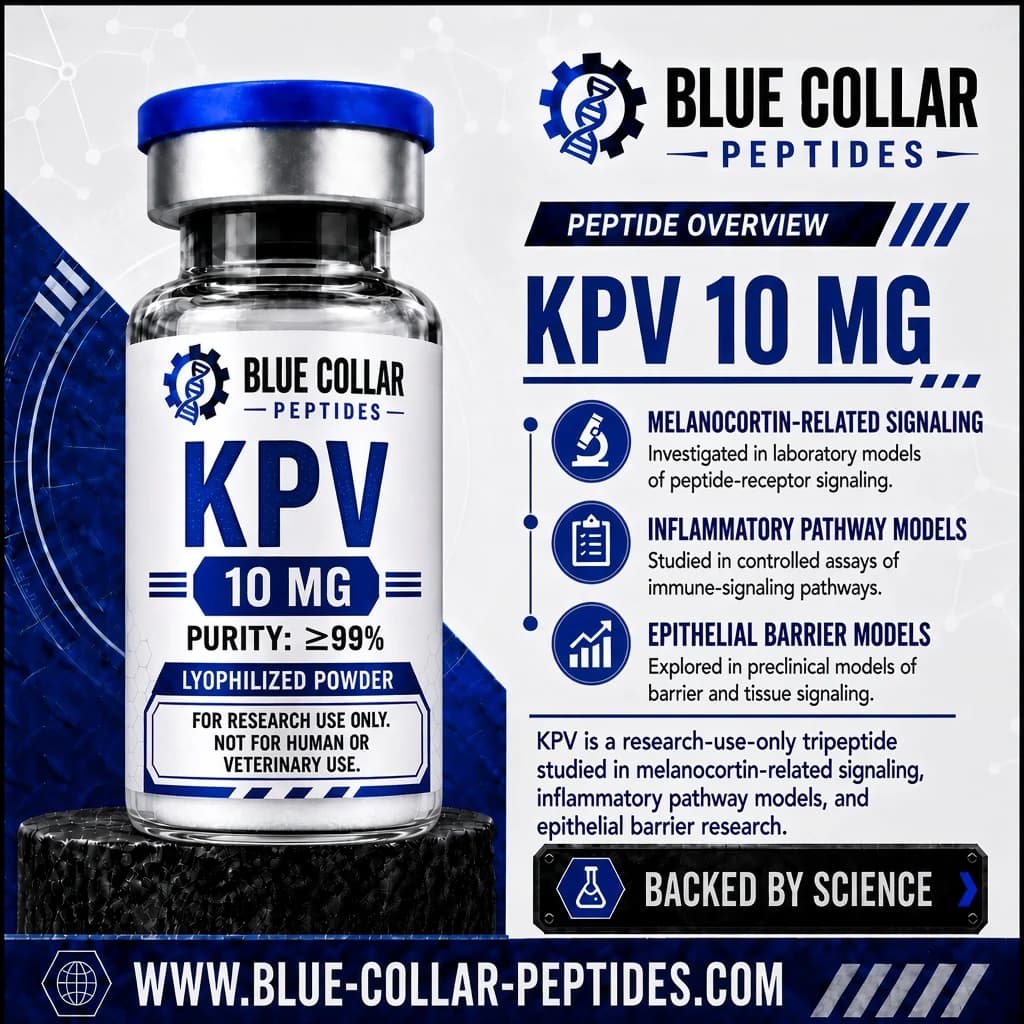
KPV is a research-use-only tripeptide examined in melanocortin-related signaling, inflammatory pathway models, and epithelial barrier research.
View KPV 10 mgBrowse all research materials
Search the complete catalog by product, category, price, stock status, and available documentation.
Shop all productsReferences and further reading
Open the original sources and evaluate their methods, limitations, and applicability independently.
Related education
 Research MethodsResearch Methods · 8 min readAnalytical Method Validation Basics for Research BuyersA plain-language explanation of specificity, accuracy, precision, range, and fitness for intended purpose.Read article →
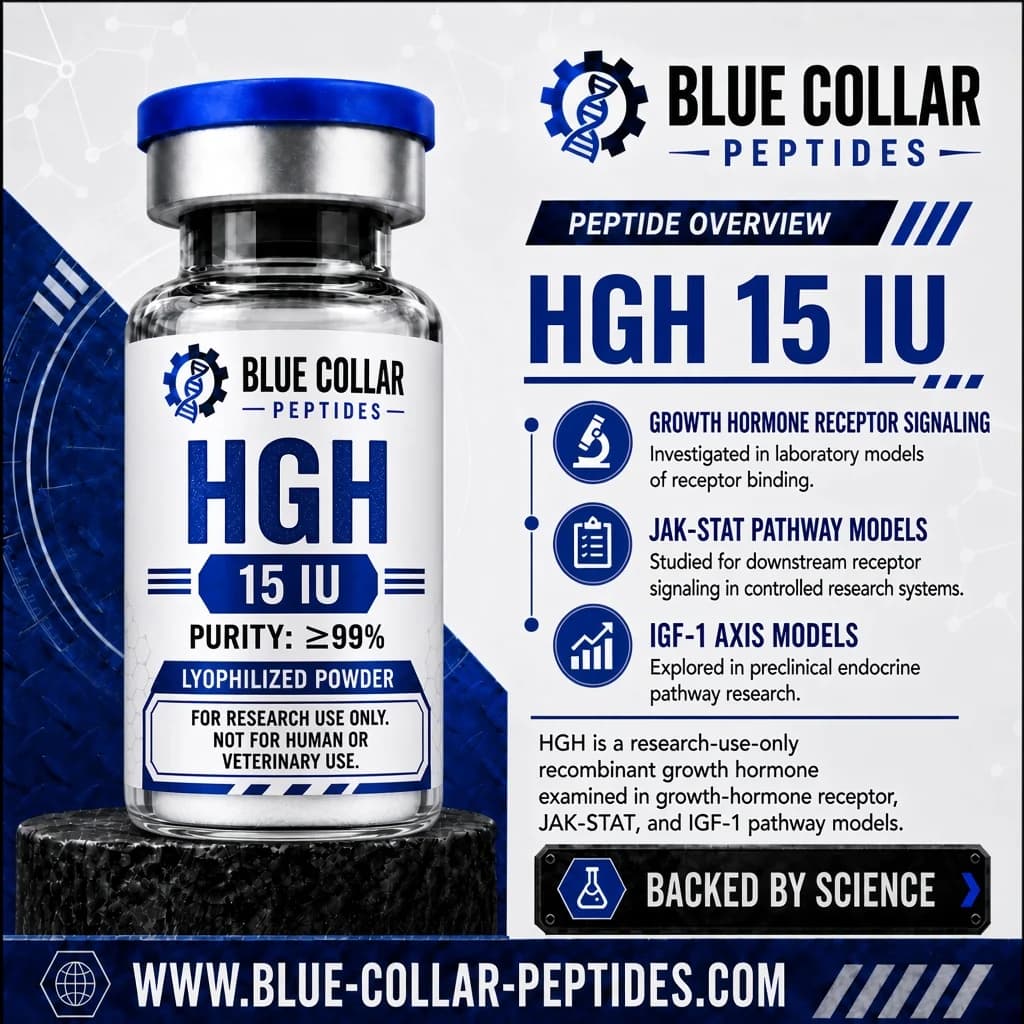 Research MethodsResearch Methods · 4 min readGrowth-Hormone Papers Stay in the Paper. The Vial Stays HGH 15 IU.Receptor, JAK-STAT, and IGF-1 models show up in the literature under somatropin. They are not a protocol for this listing.Read article →COAs & TestingCOAs & Testing · 4 min readKPV 10 mg Is Not the KPV Line on the KLOW ReportTask 87708 prints KPV 11.75 mg inside a blend. The single vial on this catalog is KPV 10 mg at $39.99. Those are different records.Read article →
Research-use notice
This material is educational and does not provide medical, dosing, administration, treatment, or human-use guidance. For laboratory research use only.