
Laboratory research education only. This article does not provide human or veterinary dosing, administration, diagnosis, treatment, or safety guidance.
What the catalog sentence is
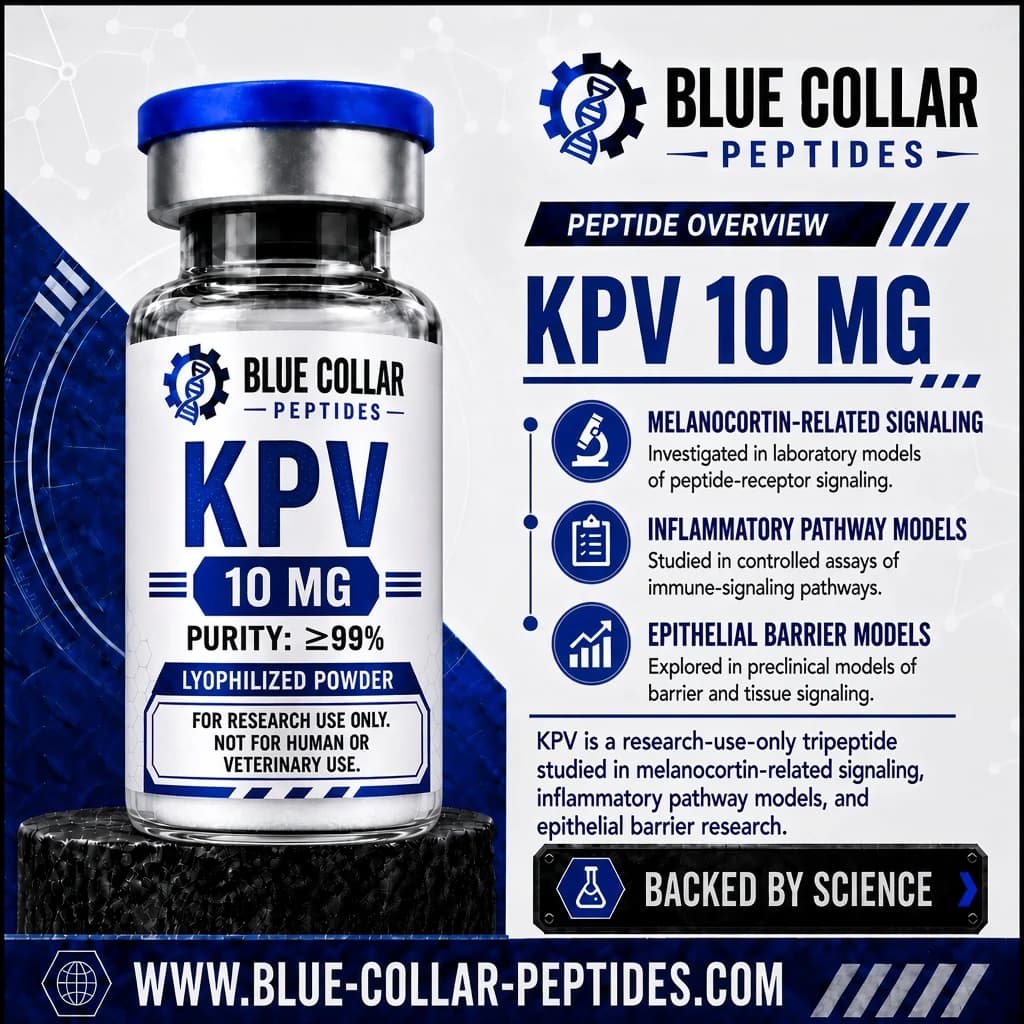
The KPV listing on this site says the tripeptide is examined in melanocortin-related signaling, inflammatory pathway models, and epithelial barrier research. That is a map of topics in laboratory and preclinical papers. It is not a claim that the batch in a given vial was the batch in those papers, and it is not a set of steps.
If you need a paper, search the residue names and KPV, then read the methods until you know the system. A title with the right three letters is not enough.
Models disagree with each other on purpose
A cell assay and an animal model can use the same abbreviation and measure different things. One can be about a barrier in a dish. Another can be about a receptor binding setup. Quoting both as “KPV does X” flattens them into an ad. Keep the system in the sentence: which cells, which readout, which paper.
None of that is instructions for a person or an animal. This shop does not sell the vial for those uses, and this article will not translate a figure into one.
Watch for blends wearing the name
Some papers and a lot of product pages discuss KPV as an ingredient beside other peptides. That is the literature version of the KLOW problem. If the methods list four sequences, you are not reading a paper about the single 10 mg listing, even if KPV is the word in the abstract’s first line.
Write “blend” in your annotation when it is a blend. Your future self will try to cite it for the single if you do not.
No doses move across
Concentrations in a paper belong to that assay. They are not a reconstitution plan for a 10 mg vial, and this page will not compute one. Record the paper’s conditions inside the paper’s notes. Record the vial as KPV 10 mg, $39.99, batch when you have it.
Mixing those notes is how a research catalog turns into something it is not.
The use line
Adults 21 and older. Laboratory research only. Not for human or veterinary use.
Annotate the system in the filename
Save a paper as kpv-cell-barrier-2021 or whatever the system and year actually are, not as kpv-proof.pdf. The word proof is how a model becomes a claim about the $39.99 vial. The filename should embarrass you if you try to use it as a protocol.
Inside the note, one sentence on what was measured and one sentence that says the vial batch was not in the study unless the methods cite that batch, which they will not. Stop. The receiving record remains KPV 10 mg, catalog price, batch from the label.
Adults 21 and older. Laboratory research only. Not for human or veterinary use.
Keep a one-line index of papers: system, year, whether the methods used a single tripeptide or a mixture. Ten lines on a page beat a folder of fifty PDFs you will not reread. The vial does not get a line on that index. The vial’s line is in receiving: KPV 10 mg, $39.99, batch.
When a search result is a method for giving a material to an animal or a person, close it. This folder is for analytical notes and for naming the tripeptide, not for a procedure. KPV 10 mg at $39.99 is a catalog line for laboratory research by adults 21 and older. A methods section that tells someone what to do with a body does not get saved next to the invoice, even if the abstract used the right three letters. Save the invoice and the catalog line. Leave the procedure in the browser tab you just closed. The catalog page is the page that belongs in the bookmark.
Products and current documentation
Product links are provided for specifications, availability, research-use details, and available batch documents. They do not convert cited research into a product claim.
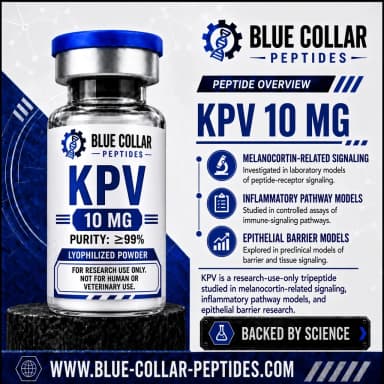
KPV 10 mg
KPV is a research-use-only tripeptide examined in melanocortin-related signaling, inflammatory pathway models, and epithelial barrier research.
View KPV 10 mgBrowse all research materials
Search the complete catalog by product, category, price, stock status, and available documentation.
Shop all productsReferences and further reading
Open the original sources and evaluate their methods, limitations, and applicability independently.
Related education
 Research MethodsResearch Methods · 8 min readAnalytical Method Validation Basics for Research BuyersA plain-language explanation of specificity, accuracy, precision, range, and fitness for intended purpose.Read article →
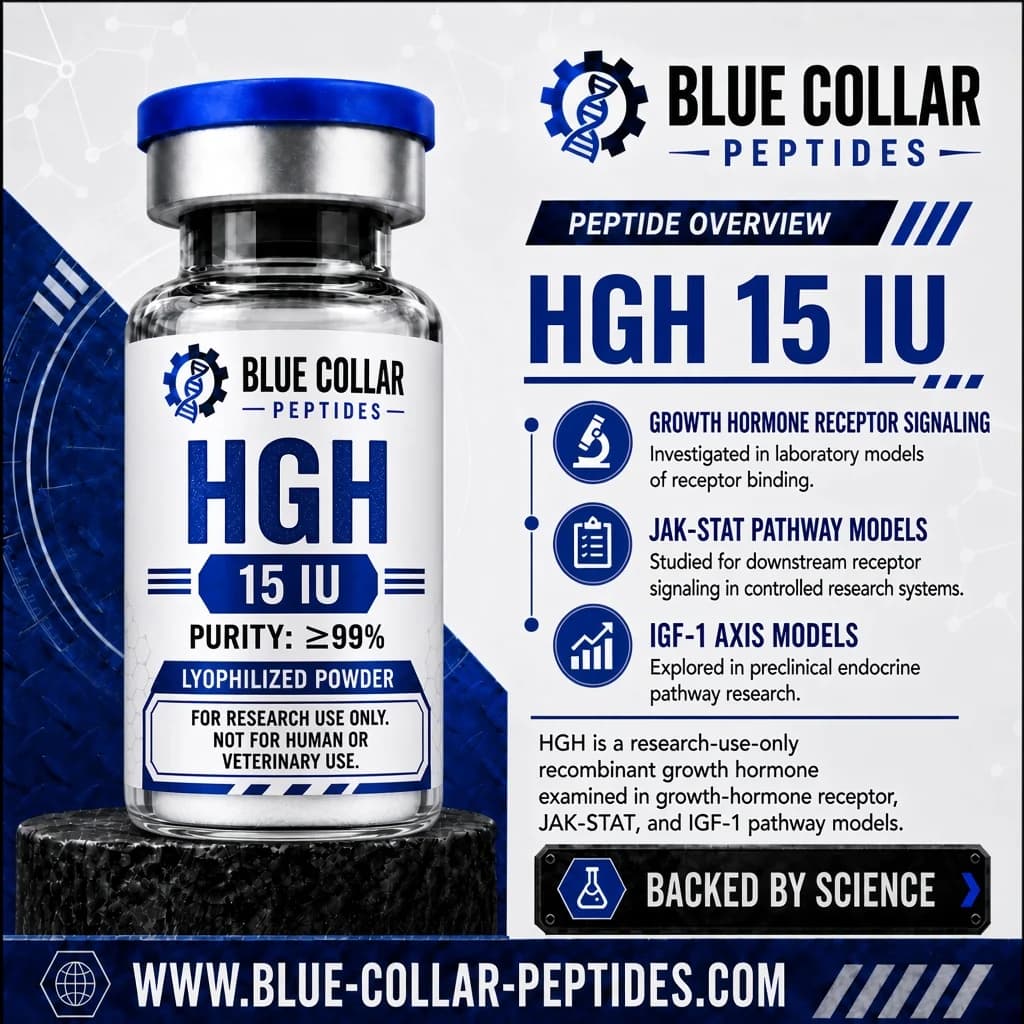 Research MethodsResearch Methods · 4 min readGrowth-Hormone Papers Stay in the Paper. The Vial Stays HGH 15 IU.Receptor, JAK-STAT, and IGF-1 models show up in the literature under somatropin. They are not a protocol for this listing.Read article →COAs & TestingCOAs & Testing · 4 min readKPV 10 mg Is Not the KPV Line on the KLOW ReportTask 87708 prints KPV 11.75 mg inside a blend. The single vial on this catalog is KPV 10 mg at $39.99. Those are different records.Read article →
Research-use notice
This material is educational and does not provide medical, dosing, administration, treatment, or human-use guidance. For laboratory research use only.