
Laboratory research education only. This article does not provide human or veterinary dosing, administration, diagnosis, treatment, or safety guidance.
Start with a precise GHK-Cu 50 mg research question
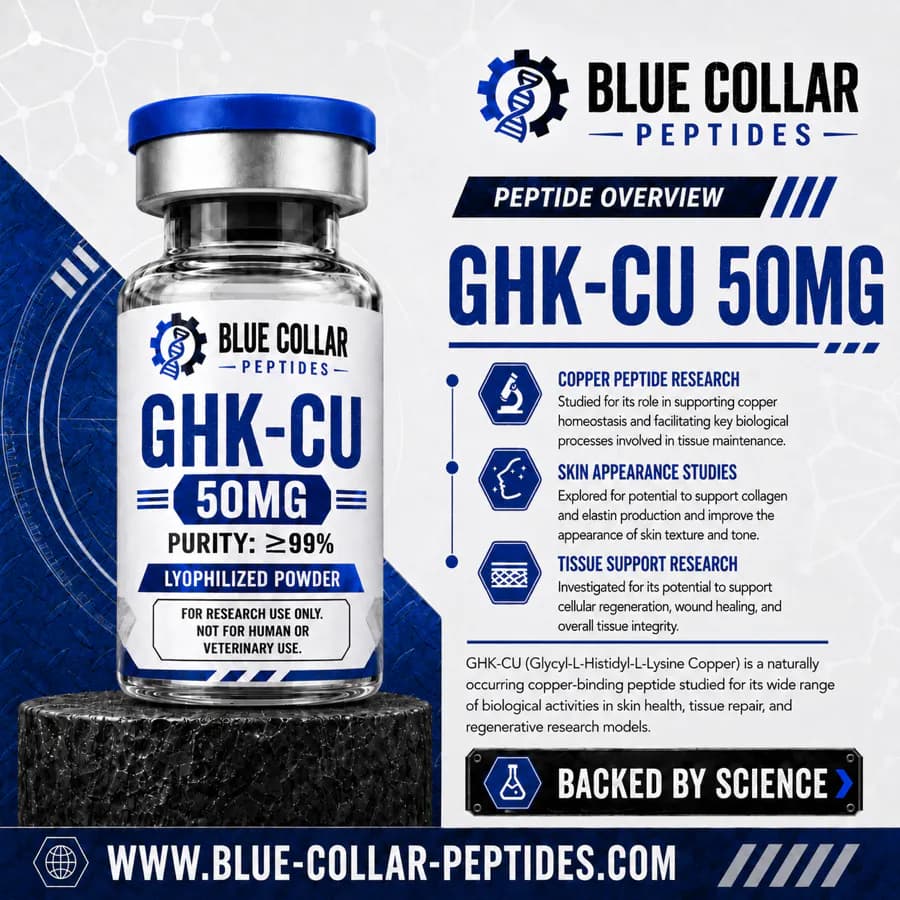
GHK-Cu is studied in copper-peptide coordination and laboratory models involving fibroblast, gene-expression, and extracellular-matrix signaling. A useful review begins by turning a broad interest into a question that names the experimental model, the pathway or measurement of interest, the comparator, and the intended endpoint. For GHK-Cu 50 mg, the current catalog summary identifies Copper-peptide coordination, Gene-expression assays, Extracellular-matrix signaling as relevant areas for literature navigation. Those phrases are starting points for a database search, not promises of an outcome. Record synonyms, sequence or formulation details, model type, exposure conditions, assay, and date limits before searching. This makes the process repeatable and prevents the question from changing after results are seen. The supplier documentation, analytical scope, labeling, traceability, support, and research-use boundaries should be considered separately so that one observation is not used to answer a different question. A cell-based signal, animal-model observation, analytical measurement, and controlled human study occupy different levels of evidence. State in advance what would count as supportive, conflicting, or inconclusive evidence. That written boundary improves transparency and makes it easier for another reviewer to reproduce the search.
Separate material identity from biological interpretation
Before interpreting any reported effect, verify what material the investigators actually studied. Names can conceal differences in sequence, salt form, formulation, purity, measured content, storage history, or preparation. A paper may describe a nominal amount without publishing independent analytical confirmation. A commercial COA, meanwhile, describes only the tested sample and the scope printed on that report; it does not prove that every published finding applies to the material. Review identity evidence, chromatographic information, mass evidence, measured content, and stated limitations as distinct fields. For GHK-Cu 50 mg, connect the product label and any available batch document to the receiving record without treating the commercial record as a substitute for the scientific paper. This distinction is central to supplier documentation, analytical scope, labeling, traceability, support, and research-use boundaries. It also prevents a high purity percentage from being mistaken for identity, content, sterility, endotoxin status, stability, or biological activity. When a source does not report a needed detail, record “not reported” rather than estimating it. Clear unknowns are more useful than confident assumptions.
Evaluate the experimental model and controls
The meaning of a GHK-Cu 50 mg result depends on the model and controls. Identify whether the work used a biochemical assay, cultured cells, tissue, an animal model, an observational dataset, or a controlled human study. Then document sample size, randomization, blinding, comparator, vehicle control, positive and negative controls, replicate structure, inclusion rules, and statistical approach. Ask whether the endpoint directly measured the proposed pathway or relied on a proxy. Check whether the experiment tested a single condition or a range, and whether investigators reported variability rather than only a mean. Research involving Copper-peptide coordination, Gene-expression assays, Extracellular-matrix signaling may use different assays that sound similar but are not interchangeable. Compare like with like before combining conclusions. A result can be internally valid within a narrow model while remaining uncertain outside it. Strong summaries describe the model first and conclusion second. They also include null results, conflicting evidence, and author-reported limitations. This approach keeps supplier documentation, analytical scope, labeling, traceability, support, and research-use boundaries grounded in the actual experiment instead of the most memorable sentence in an abstract.
Read methods, measurements, and units carefully
Methods determine what a number can support. Capture the instrument or assay, calibration approach, reference material, sample preparation, recovery, detection or quantitation limits, significant figures, and units. When values are converted, preserve the original value and document the conversion. For analytical reports, distinguish retention behavior, peak-area percentage, molecular-mass evidence, measured content, water or volatile material, and endotoxin results. For biological studies, distinguish pathway markers, functional endpoints, adverse observations, and exploratory measures. Two sources about GHK-Cu 50 mg may use the same label for endpoints produced by different procedures. Do not average or rank them without first establishing comparability. The same caution applies to supplier documentation, analytical scope, labeling, traceability, support, and research-use boundaries: a polished chart cannot repair incompatible methods. Review system suitability and validation context where available, and note whether a result is nominal, calculated, or directly measured. Method-aware writing is slower than copying a headline, but it produces a more durable educational resource and a cleaner audit trail.
Assess source quality and independent replication
Search beyond a single paper. Follow references backward to foundational work and use citation databases to identify later studies, corrections, reviews, and attempts at replication. Prefer original sources for specific findings, then use systematic reviews or authoritative guidance to understand the broader landscape. Record funding, conflicts of interest, preregistration, data availability, protocol access, and whether findings were independently reproduced. A large citation count does not automatically mean that a conclusion is strong; repeated citations may point back to one experiment. For GHK-Cu 50 mg, group evidence by model and endpoint rather than combining every paper into one narrative. Give greater weight to transparent methods, appropriate controls, adequate sample sizes, prespecified analyses, and reproducible measurements. Note publication date because terminology and analytical capability can change. External links on this page are provided so readers can independently review sources. They do not imply that every indexed paper reaches the same conclusion or supports a commercial claim about GHK-Cu 50 mg.
Build a traceable laboratory record
A useful record links the purchase entry, label, product identifier, batch or lot information when provided, receiving date, storage location, analytical document, preparation event, experiment identifier, and final disposition. Preserve original files and use controlled filenames for reviewed copies. Record who completed each review and when. If a document is replaced, retain the revision history required by the laboratory’s procedure. During GHK-Cu 50 mg work, document environmental exposure, transfers, freeze-thaw history where relevant, container changes, concentration calculations, and elapsed time. Arithmetic alone does not establish solubility, compatibility, stability, or experimental suitability. Material-specific evidence and an approved procedure are still required. These controls directly support supplier documentation, analytical scope, labeling, traceability, support, and research-use boundaries by making observations attributable to a defined material and history. They also make discrepancies easier to investigate. If a product page links a COA, verify that the product and task information match before associating it with the internal record.
Write conclusions with calibrated language
Use verbs that match the evidence: a study measured, observed, reported, suggested, failed to detect, or generated a hypothesis under specified conditions. Avoid converting association into causation or a preclinical observation into a human outcome. Do not describe GHK-Cu 50 mg as proven, safe, effective, therapeutic, or appropriate for an unstated use unless a qualified source and regulatory context directly support that exact conclusion. Summaries should name uncertainty, conflicting results, missing measurements, and the limits of generalization. When discussing Copper-peptide coordination, Gene-expression assays, Extracellular-matrix signaling, explain which model produced each observation. Keep educational discussion separate from catalog information, pricing, and availability. Product links help readers navigate to specifications and available documents; they do not turn literature findings into claims about a current batch. Calibrated language makes the page more credible to serious readers and easier to update when new evidence appears. It also preserves the research-use-only boundary that applies across the Blue Collar Education Center.
Next steps for responsible GHK-Cu 50 mg research
Use this article as a map, then open the cited databases and guidance documents. Create a search log, screen the original papers, and compare studies that use similar models and endpoints. Review the GHK-Cu 50 mg product page for current specifications, stock status, related materials, and any linked analytical record. Search the COA library by product or task information when a report is available. Consult the storage guide, terminology glossary, calculators, and comparison articles only within their stated educational scope. Before laboratory work, apply institutional procedures for facilities, training, controls, documentation, waste handling, and review. Nothing in this article provides human or veterinary dosing, administration, diagnosis, treatment, or safety guidance. If a scientific or documentation question cannot be answered from a verified source, record it as unresolved and identify the evidence needed to answer it. That approach protects data integrity and turns uncertainty into a productive next research question.
Products and current documentation
Product links are provided for specifications, availability, research-use details, and available batch documents. They do not convert cited research into a product claim.
GHK-Cu 50 mg
GHK-Cu is studied in copper-peptide coordination and laboratory models involving fibroblast, gene-expression, and extracellular-matrix signaling.
View product →View current COA →Browse all research materials
Search the complete catalog by product, category, price, stock status, and available documentation.
Shop all productsReferences and further reading
Open the original sources and evaluate their methods, limitations, and applicability independently.
Related education
 Quality & TransparencyQuality & Transparency · 12 min readA Documentation-First Framework for Comparing Research SuppliersA detailed, citation-led guide to equivalent products, total price, specifications, COAs, policies, support, and discrepancy resolution, written for research documentation and laboratory education.Read article →Quality & TransparencyQuality & Transparency · 12 min readHow to Match Quality Claims to Supporting EvidenceA detailed, citation-led guide to claim language, test scope, batch applicability, specifications, records, dates, and limitations, written for research documentation and laboratory education.Read article →
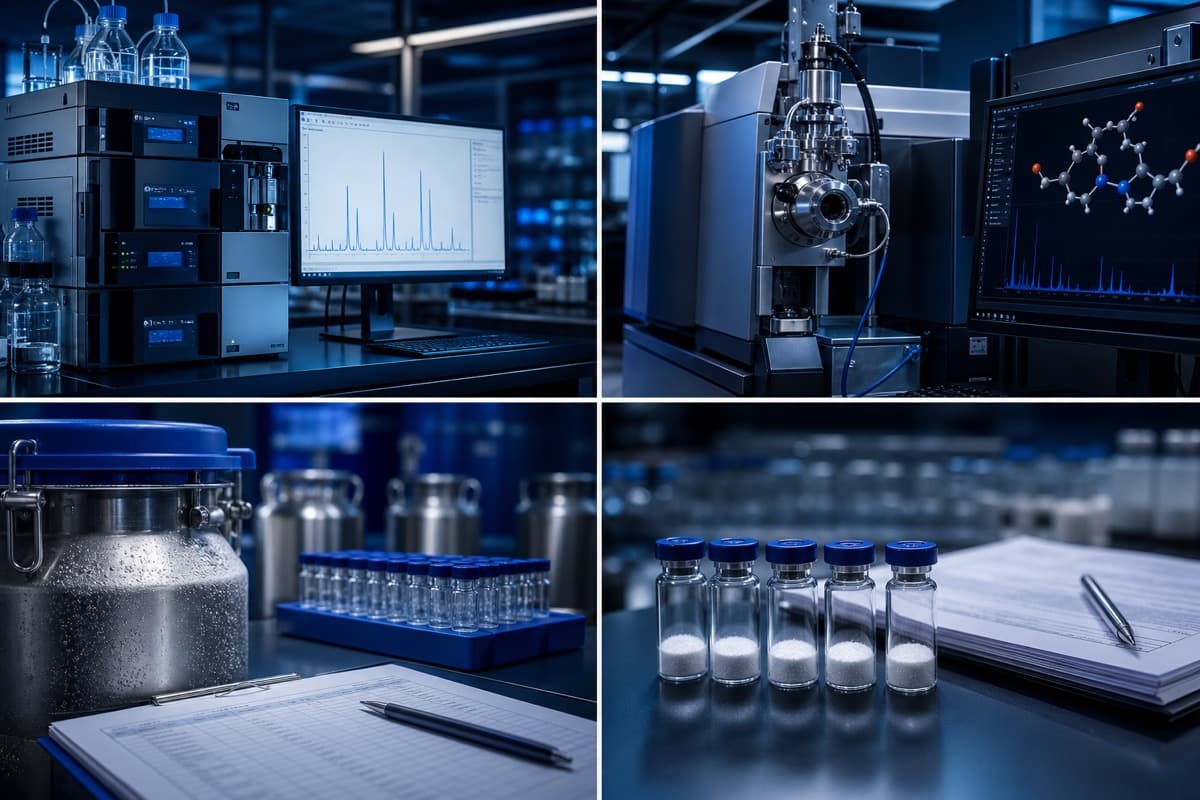 Quality & TransparencyQuality & Transparency · 12 min readALCOA+ Principles for Research-Material RecordsA detailed, citation-led guide to attributable, legible, contemporaneous, original, accurate, complete, consistent, enduring, and available records, written for research documentation and laboratory education.Read article →
Research-use notice
This material is educational and does not provide medical, dosing, administration, treatment, or human-use guidance. For laboratory research use only.